The Discovery Model

Care starts with understanding.

The Discovery Model is Helm's framework for understanding each child, shaping the care around them and continually adapting that care as their needs, strengths and capacity change.
Progress is guided by readiness, clinical understanding and what the child shows us they are ready for next — not simply the passing of time.
Eight stages. One individual journey.
Discovery
Model
Referral
Observation
Assessment
Safe base
Intervention
Stabilisation
Developing
Independence
Independence
Referral → Independence
A structured pathway that adapts as needs change.

Discovery
happens
over time.

The stages give care structure and direction, but they are not a rigid timetable. Children may move forward, pause, revisit earlier stages or need different things at different points. Progress is shaped around the individual child.
Structured enough to give direction.
Flexible enough to remain individual.

The Discovery Pathway

01

Referral

Clinical screening, assessment, transition planning and training.
02

Observation

Skilled observation across risk, relationships and daily routines.
03

Assessment

SDQS, RCADS, formulation, attachment and trauma assessments.
04

Secure base

PACE-informed care, co-regulation, key adults and relational safety.
05

Intervention

Bespoke keywork, direct clinical input, therapeutic plans and outcome review.
06

Stabilisation

Embedding strategies, reviewing change, reassessment and reformulation.
07

Developing Independence

Life skills, identity work, pathway planning, education, and community inclusion.
08

Independence

Transition planning, endings work, memory books and lifelong links.

More than a model

The pathway gives direction.
Care brings it to life.

The Discovery Model gives every child a clear pathway from referral towards greater independence. But the stages are only one part of the model. What happens around the child - how we understand them, how adults respond, what we learn and how care adapts - is what brings that pathway to life.
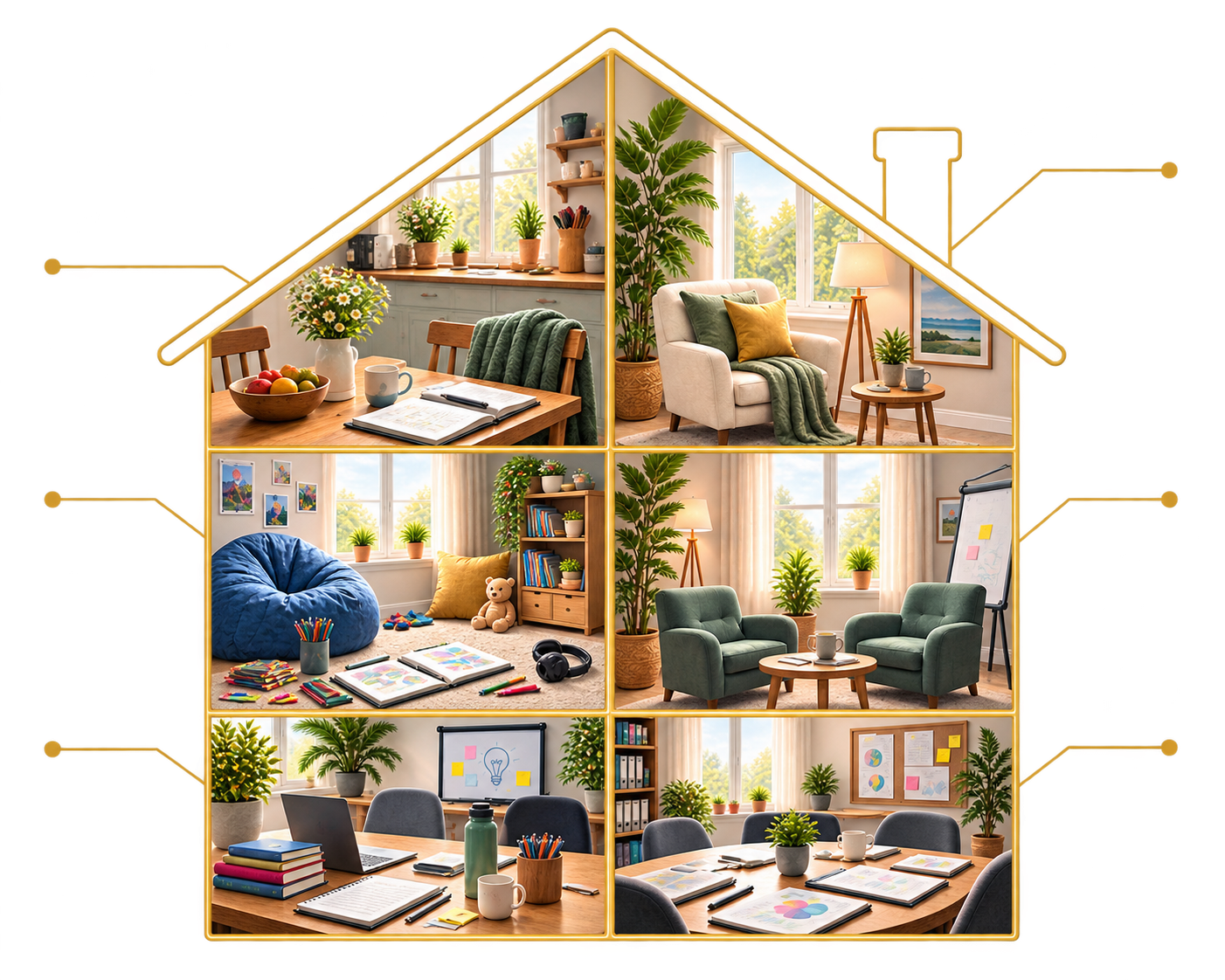
THE CHILD Therapeutic Practice Clinical Understanding Training and Development Discovery Pathway Review and Progression

The model in practice

The pathway is
only the beginning.

What makes the Discovery Model different is what surrounds it: clinical understanding, therapeutic parenting, direct work, bespoke learning and continuous reflection woven into everyday care.

Therapeutic Parenting

Therapeutic Parents use relational, trauma-informed and PACE-informed approaches to create safety, co-regulation, consistent boundaries and repair in everyday life.

Embedded Clinical Team

The clinical team work alongside the home rather than at a distance. Observation, consultation and formulation are informed by the child's real relationships, routines, transitions and difficult moments.

Clinical Oversight and Review

Clinical understanding is carried into care planning, core-team meetings, formulation review and wider professional discussions. Progress, risk, barriers and changing needs are considered together so the plan around the child remains live and in line with current needs.

Direct Clinical Work

Where appropriate, children receive direct work shaped around their individual needs and goals. This may include clinical sessions, emotional-development work, bespoke keywork, safety planning and other targeted support.

In-the-moment Coaching

Learning does not stop when training ends. Mental Health Practitioners, Clinical Therapeutic Parents and clinically informed Practice Leads observe, model, coach and reflect alongside teams — helping understanding translate into the response a child receives in the moment.

Bespoke Training

Teams receive ongoing training and practice development shaped around the children living in the home - their trauma histories, neurodevelopmental needs, risks, relationships and current challenges - rather than relying only on a generic training calendar.

A model that moves with the child

The destination matters.
So does how we get there.

Every child's pathway through Helm is different. The stages provide direction, but progress is shaped by the child - what they need, what they are ready for and what we learn along the way.